
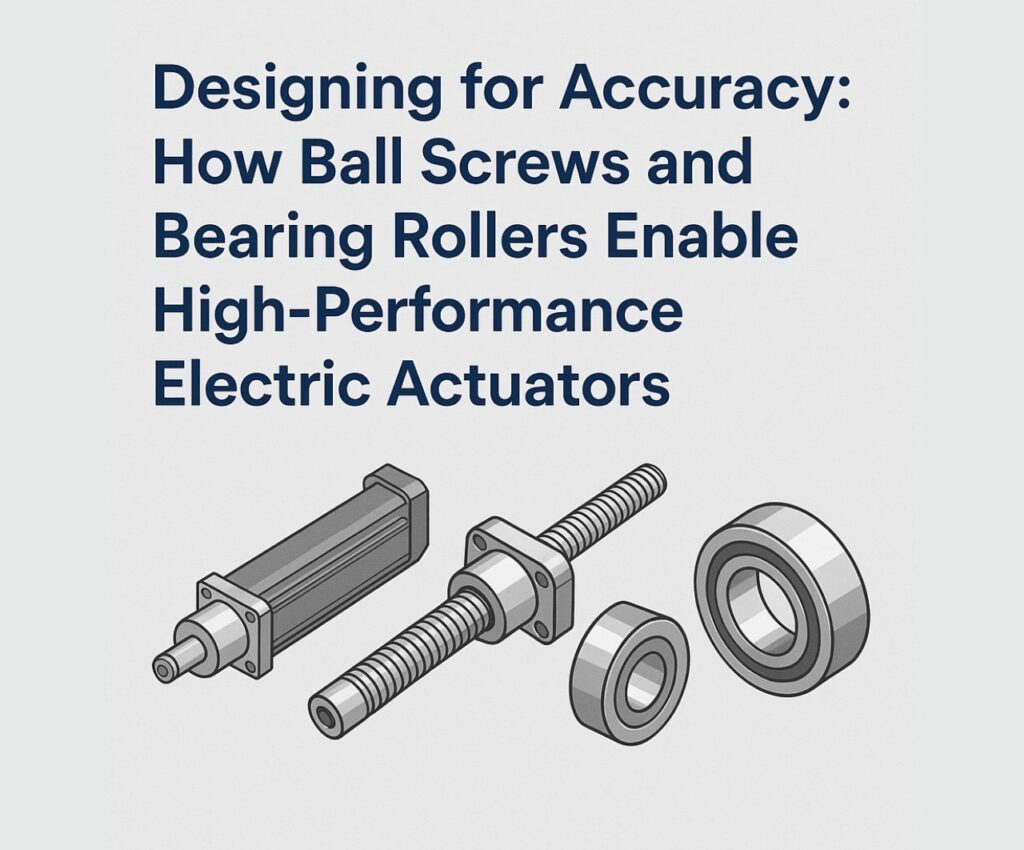
When engineers design motion systems requiring speed, precision, and long service life, few components are as critical as the roller bearing rollers, ball screw, and electric cylinder actuator. Together, these elements form the mechanical foundation of high-performance automation—from factory robotics and CNC equipment to medical devices and aerospace control systems. Selecting and integrating these components correctly is key to building actuators that deliver accurate motion under demanding loads and conditions.
In this guide, we’ll explore how roller bearing rollers and ball screw mechanisms contribute to efficient force transmission, and how they fit into the overall architecture of an electric cylinder actuator. Whether you’re developing new platforms or sourcing components for an existing system, understanding the design principles behind these technologies will help ensure your actuator performs flawlessly—cycle after cycle. Know More
Understanding the Electric Cylinder Actuator
An electric cylinder actuator is a type of linear actuator that converts rotary motion (usually from a servo or stepper motor) into precise linear displacement. It replaces traditional hydraulic and pneumatic systems by offering cleaner operation, higher control, and better integration with digital control systems.
Key Features:
- Programmable motion control
- High repeatability
- Load capacities up to several tons
- Stroke lengths customizable to application
Inside every high-precision electric cylinder actuator are two critical mechanical components: the ball screw, which converts rotation to linear movement, and roller bearing rollers, which support and guide that motion under load.
The Role of the Ball Screw in Linear Motion
The ball screw is one of the most efficient methods for converting rotary to linear motion, achieving efficiencies of 85–95% compared to 20–30% in traditional lead screws.
Why Engineers Choose Ball Screws:
- Low Friction: Recirculating ball bearings reduce sliding friction to rolling friction.
- High Accuracy: Leads can be held to micron-level tolerances.
- Load Capacity: Handles significant axial loads with minimal backlash.
- Long Life: Properly lubricated systems offer millions of cycles.
Because an electric cylinder actuator often moves heavy loads at high speeds and must stop with extreme precision, the ball screw is the perfect match for its drivetrain.
Roller Bearing Rollers: Supporting Precision Under Pressure
While the ball screw delivers linear thrust, roller bearing rollers handle radial and axial forces that emerge from misalignment, vibration, or structural inertia.
What Are Roller Bearing Rollers?
These are cylindrical rolling elements used within linear guides or rotary bearings. Unlike balls, roller bearing rollers provide line contact with the raceway instead of point contact, which distributes load more evenly and reduces deformation.
Benefits of Roller Bearing Rollers in Electric Actuator Design:
- Higher Load Rating: Better suited for supporting actuator carriages, tooling platforms, or payloads.
- Rigidity: Reduces deflection in structural systems.
- Shock Resistance: Superior damping in dynamic applications.
- Longevity: Minimal wear under properly aligned, lubricated conditions.
For engineers specifying a roller bearing rollers system, selecting the right configuration—cylindrical, tapered, or needle—is crucial for matching performance to the actuator’s operating conditions.
Designing the Perfect Motion Chain: Ball Screw and Bearing Integration
A properly designed electric cylinder actuator integrates both the ball screw and roller bearing rollers to ensure:
- High linear accuracy
- Structural stability
- Vibration resistance
- Energy efficiency
Let’s break down how the components interact in an optimized actuator:
| Component | Primary Function | Integrated Role in Actuator |
| Ball Screw | Converts rotary to linear motion | Generates forward/backward thrust |
| Roller Bearing Rollers | Support moving platform and reduce friction | Stabilize linear motion and absorb load |
| Electric Motor | Provides rotary input | Drives the ball screw |
| Housing & Guides | Protect internal mechanics | Ensure alignment and reduce contaminants |
Key Design Considerations for Engineers
To fully leverage the benefits of ball screw and roller bearing rollers in actuator design, engineers must factor in several critical performance parameters.
1. Load Profile
Determine static and dynamic forces acting on the actuator. For high axial loads, select a ball screw with a larger lead and nut design. For high side loads, reinforce your design with precision-ground roller bearing rollers.
2. Precision Requirements
If your actuator needs micrometer-level positioning (e.g., in CNC machining or optical assembly), choose a C5 or better accuracy class ball screw and pair it with zero-backlash roller bearings.
3. Speed vs. Load Trade-Off
Higher leads increase speed but reduce thrust capacity. Pairing high-speed ball screw designs with roller bearing rollers that can handle rapid directional changes is key for automation environments.
4. Temperature and Environment
In high-heat or contaminant-heavy settings (e.g., food-grade or foundry), choose sealed roller bearing rollers and ball screws with specialized coatings or materials (e.g., stainless steel, ceramic hybrids).
Maintenance & Lifecycle: Keeping Precision on Track
Both ball screw and roller bearing rollers are long-life components—but only if maintained properly.
Maintenance Tips:
- Lubricate regularly using recommended grease or oil.
- Inspect preload and backlash every 500,000 cycles or per OEM spec.
- Replace seals at the first sign of contamination.
- Monitor temperature rise—a spike may indicate internal wear or misalignment.
A well-maintained electric cylinder actuator can perform over 10 million cycles without loss of precision.
Common Pitfalls to Avoid
Even the best components can underperform if integration is flawed. Here are common mistakes engineers should watch for:
- Improper Alignment:
Misaligned guides increase side loads on the ball screw, leading to premature wear. - Under- or Over-Preloading:
Incorrect preload affects stiffness and heat generation in both the screw and bearings. - Ignoring Acceleration Loads:
Accelerating/decelerating heavy payloads without considering inertia forces may overstrain the roller bearing rollers. - Generic Sizing:
Always match screw lead and bearing class to your exact motion profile—not just motor specs.
By carefully engineering the motion chain, designers can avoid performance shortfalls and extend component life.
Industry Applications of Electric Cylinder Actuators with Precision Bearings
Applications that benefit most from integrating ball screw and roller bearing rollers in electric cylinder actuator designs include:
| Industry | Use Case |
| Industrial Automation | Pressing, positioning, and packaging lines |
| Aerospace & Defense | Wing flap control, satellite positioning |
| Medical Devices | MRI patient tables, robotic surgery arms |
| Electronics Assembly | Soldering platforms, SMT placement systems |
| Material Testing Labs | Force/load displacement machines |
In each case, precise control of linear motion is critical—and that’s where these core components shine.
The Future of Precision Motion Systems
The trend toward miniaturization, Industry 4.0 integration, and increased uptime means the role of the ball screw, roller bearing rollers, and electric cylinder actuator will only grow in importance.
Emerging Trends:
- Smart actuators with built-in sensors for vibration, temperature, and cycle tracking
- Self-lubricating systems using embedded micro-reservoirs
- Zero-backlash harmonic integration into high-performance actuators
- Ceramic and carbon composite ball screws for weight-critical designs
By staying ahead of these trends, OEMs and engineers can future-proof their motion platforms and improve system-wide ROI.
Final Thoughts: Designing for Accuracy Starts at the Core
The success of any precision motion platform comes down to the mechanics that drive it. Selecting the right ball screw and roller bearing rollers combination for your electric cylinder actuator ensures reliable, accurate, and repeatable motion—whether you’re building robots, testing equipment, or next-gen automation systems.
By focusing on load demands, speed requirements, environmental constraints, and integration geometry, engineers can build electric actuators that don’t just move—they excel.
Need help sourcing ball screws and precision roller bearing rollers? As a leading OEM supplier, we offer high-performance components, technical support, and wholesale pricing to power your most demanding actuator designs. Contact us today for selection guidance, CAD files, or engineering collaboration. Know More