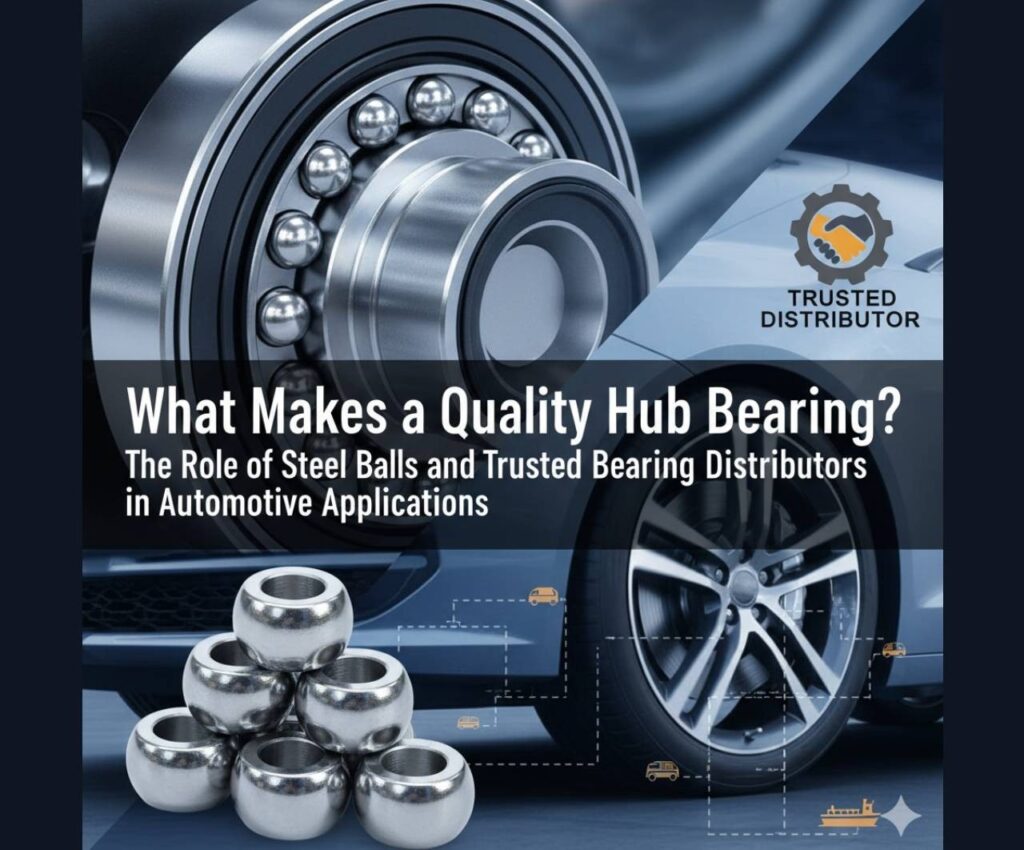
When it comes to vehicle performance, few components are more vital—and more misunderstood—than the hub bearing. Tucked away behind the wheel, this compact but powerful assembly plays a central role in safety, ride quality, and long-term drivetrain performance. Inside every high-quality hub bearing, precision-engineered steel balls handle immense rotational loads and reduce friction to near-zero levels. And just as important as the components themselves is where you source them. That’s why working with reliable bearing distributors is essential for ensuring consistent quality, compatibility, and long-term support.
In this article, we’ll explore the defining characteristics of a top-tier hub bearing, explain the materials science behind steel balls, and highlight the importance of trusted bearing distributors in the automotive supply chain. Whether you’re an OEM buyer, fleet manager, or technician, these insights will help you make informed decisions that impact vehicle performance and customer satisfaction. Know More
Understanding the Hub Bearing: Why It Matters
A hub bearing connects the wheel to the vehicle’s axle and enables smooth rotation while carrying both vertical load and lateral stress from cornering and braking. It also houses critical components like the ABS sensor, flange, and seals. In modern vehicles, hub bearings are sealed units, which means they’re not serviceable and must be replaced entirely when worn or damaged.
Functions of a Hub Bearing:
- Reduce friction between the rotating wheel and the stationary suspension
- Support the vehicle’s weight
- Allow smooth steering and responsive handling
- Transmit wheel speed data via integrated sensors
Because they are under constant stress and rotation, hub bearing failures can lead to uneven tire wear, vibration, noise, and even dangerous wheel detachment.
The Material Science Behind Steel Balls in Bearings
At the heart of every hub bearing are the steel balls or tapered rollers that allow for low-friction motion. The strength, hardness, and surface finish of these steel balls determine the bearing’s longevity and load capacity.
What Makes Quality Steel Balls?
- Material: Most steel balls are made from AISI 52100 chrome steel, known for:
- High wear resistance
- Uniform hardness
- Excellent fatigue strength
- Hardness: Typically hardened to HRC 60–66 through heat treatment processes.
- Roundness & Tolerance: Quality steel balls are manufactured to tolerances as tight as ±0.0001 inches. Grade 10 or better is preferred for automotive hub applications.
- Surface Finish: Polished to mirror-like finishes with surface roughness values under Ra 0.025 µm. This reduces friction and heat generation inside the bearing.
Even the most rugged vehicle applications—like trucks and off-road SUVs—rely on micro-level precision in their steel balls to avoid wear and vibration.
Signs of a Poor-Quality Hub Bearing
Not all bearings are created equal. Low-grade hub bearing units—especially those from unverified sources—often contain improperly tempered steel balls, substandard seals, or rough raceways.
Red Flags:
- Premature bearing noise (growling, humming)
- ABS sensor failures due to low-quality integration
- Rust or corrosion after minimal use
- Play or wobble in the wheel under load
Inferior hub bearings compromise not only ride comfort but also safety, especially during emergency braking or high-speed driving.
The Critical Role of Trusted Bearing Distributors
Quality parts are only as good as the supply chain that delivers them. That’s where experienced bearing distributors make all the difference. Working with verified, OEM-certified bearing distributors gives you access to:
- Guaranteed part traceability
- Factory-direct sourcing
- Inventory depth for faster fulfillment
- Expert technical support for installation and specs
What to Look For in Bearing Distributors:
- OEM and ISO Certifications
- Ensure that the hub bearing assemblies meet global standards.
- Multiple Tier Options
- From economy to premium lines, trusted bearing distributors offer tiered product selections to meet different project needs.
- Data Support
- Access to drawings, load ratings, and part cross-reference tools.
- Inventory Accuracy
- Efficient logistics and real-time stock visibility reduce delays for time-sensitive repairs or production lines.
Distributors with in-house engineers or support teams can help match the correct hub bearing and steel balls grade to the exact application—whether it’s a light-duty sedan or a Class 8 commercial truck.
The Importance of Bearing Seals and Lubrication
Aside from steel balls, the bearing seals and lubricant within a hub bearing significantly impact performance.
What to Know About Seals:
- Dual-lip rubber seals are common in sealed hub bearing units.
- Premium units use labyrinth seals for better dust and moisture resistance.
- Seals also prevent lubricant from escaping and contaminants from entering.
Lubricant Characteristics:
- Synthetic grease with molybdenum disulfide or lithium complex thickener
- Temperature ratings up to 400°F (204°C)
- Viscosity stability over high-speed cycles
Once sealed at the factory, the internal lubrication must last the life of the hub bearing, which makes grease quality non-negotiable.
Hub Bearing Design Types
There are several designs used in automotive applications, each with its unique performance and maintenance profile:
1. Generation 1 (Gen 1)
- Separate inner and outer races; press-fit into knuckle and hub flange
- Requires professional tools for removal and installation
2. Generation 2 (Gen 2)
- Bearing and flange are integrated
- Common in front-wheel-drive vehicles
- Reduced number of components and weight
3. Generation 3 (Gen 3)
- Hub, flange, ABS sensor, and bearing integrated into a sealed unit
- Bolt-on design simplifies replacement
- Superior protection from contaminants
Most modern vehicles use Gen 2 or Gen 3 hub bearing assemblies, which emphasize lower maintenance, lighter weight, and increased reliability.
Common Causes of Hub Bearing Failure
Even high-quality hub bearing units can fail prematurely if not installed or maintained correctly.
Leading Causes:
- Over-torqued axle nut: Crushes the race and overloads the steel balls
- Incorrect installation: Improper tools can damage seals or introduce debris
- Impact damage: Hitting potholes or curbs can shock the raceway
- Contamination: Water, sand, or debris enters the bearing through damaged seals
Always follow torque specs, use clean work environments, and inspect adjacent components like CV joints and brake assemblies when replacing bearings.
How to Extend Hub Bearing Life
Best Practices:
- Replace hub bearings in pairs (left and right) to ensure balanced performance.
- Use calibrated torque wrenches during installation.
- Monitor for early signs of wear—grinding, loose wheels, or ABS warning lights.
- Buy from certified bearing distributors to avoid counterfeit or substandard parts.
Fleet managers and repair shops who consistently use high-quality hub bearing assemblies and steel balls see fewer returns, less downtime, and improved customer trust.
Conclusion: Precision at the Core
In every hub bearing, the precision of the steel balls and the reliability of the sourcing partner are the cornerstones of long-term performance. Trusted bearing distributors play an essential role in ensuring that what you install meets the demanding expectations of today’s automotive industry.
From material hardness to seal integrity, every detail matters. Choosing quality parts backed by expert suppliers means safer rides, fewer comebacks, and systems that deliver performance mile after mile.
Looking for OEM-grade hub bearings and precision steel ball technology? We supply premium hub bearing assemblies, high-performance steel balls, and factory-certified products through trusted global bearing distributors. Contact us today for technical specs, pricing, or bulk orders tailored to your industry. Know More